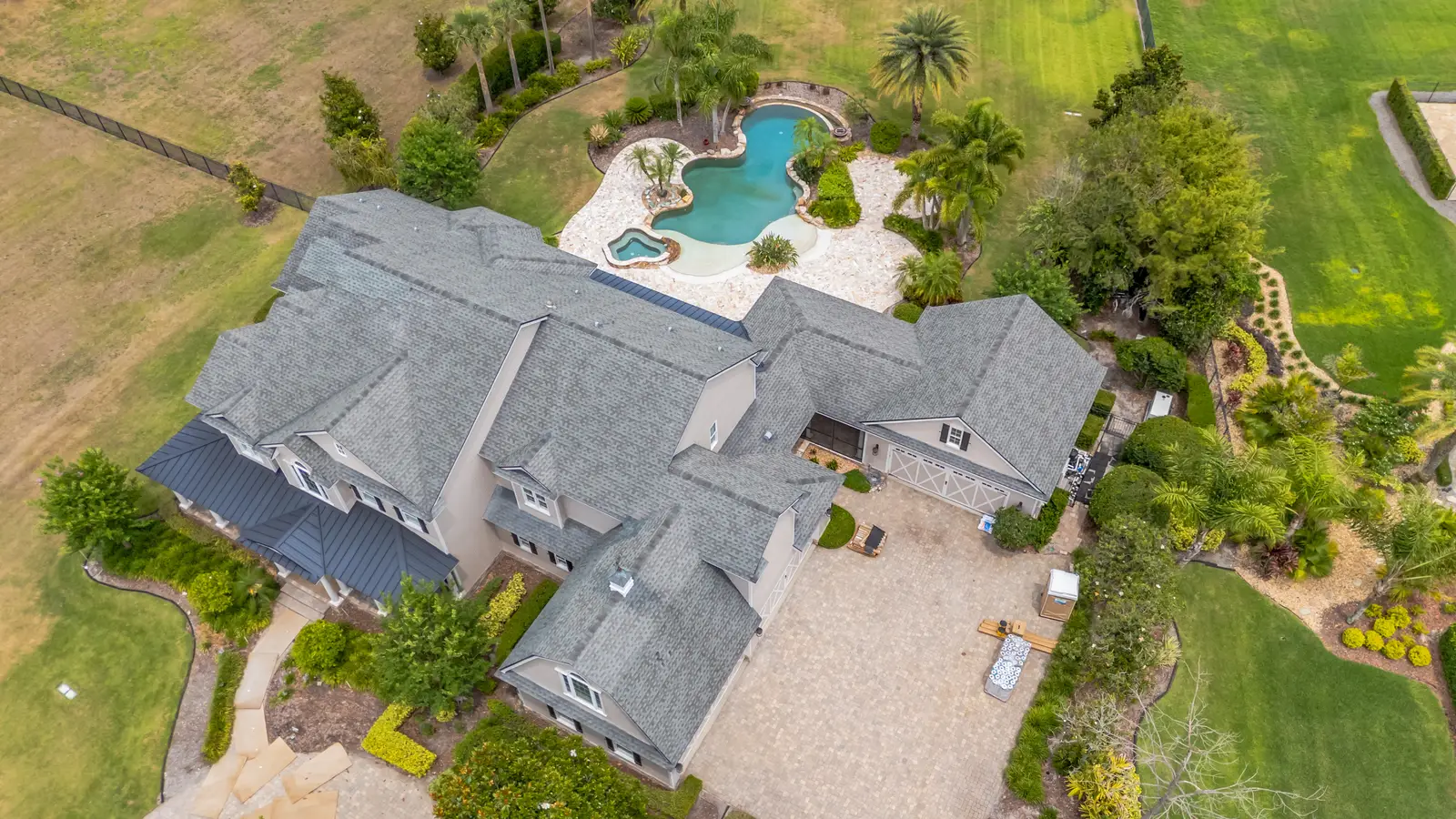
What a roof inspection is, and what it is not
A roof inspection is a roofer getting on your roof, looking at the system, and telling you what condition it is in. The covering, the details that fail first, every penetration, and whatever can be seen of the deck from above and from the attic underneath. It ends in a written report with photographs.
It is not an insurance form. We do not file it with your carrier, it does not qualify a policy, and it is usually not the document an underwriter is asking for when they write to you. Those are separate inspections with their own forms and their own licensing, and they are covered further down this page.
It is also not a quote wearing a different hat. A real inspection sometimes ends with us saying the roof is sound and you do not need work doing. If an inspection always ends in a replacement recommendation, it was a sales call with a ladder.
What a roofer actually looks at
The covering first, slope by slope, because the slopes do not age at the same rate. On shingle that is granule loss, brittleness, lifted or curled tabs, missing tabs, and whether the wear pattern matches the age of the roof or points at an attic that is not breathing. On tile it is cracked, slipped and spalling pieces, and whether somebody has been walking it in the wrong places. On metal it is fastener and washer condition, panel ends, oil canning and coating loss.
Then the details, because in this climate that is where roofs actually fail. Flashing at walls, valleys and chimneys. Pipe boots, which harden and split under Florida UV long before the field of the roof is finished. Vents, skylights, satellite mounts, and anything else punched through the surface. Ridge and hip. Drip edge. Sealant that has gone hard and pulled away.
Underneath, as far as it can honestly be seen. Soft spots underfoot and planes that have started to sag. In the attic: staining on the sheathing, daylight where there should not be any, wet or compressed insulation, rusted fastener points, and whether there is real airflow from soffit to ridge. A leak shows up on the sheathing long before it shows up on your ceiling.
And where the water goes once it leaves the roof, which gets skipped more often than anything else on this list. Whether the gutters are carrying it, whether they are pitched the right way, and whether the ground beside the house is telling you they are not.
A Florida roof fails at the boots, the flashing and the fasteners. If an inspection never got close enough to look at those, it was a glance from the driveway.
Roof inspection, four-point, wind mitigation: three different things
A four-point inspection covers four systems in the house — roof, electrical, plumbing and HVAC — and reports the age and condition of each. Carriers commonly ask for one on an older home before writing or renewing a policy. It is a whole-house inspection rather than a roofing inspection, and it is not something we perform or complete.
A wind mitigation inspection records specific construction features on the state form, OIR-B1-1802: roof covering, roof deck attachment, roof-to-wall attachment, roof geometry, secondary water resistance and opening protection. Florida Statute 627.711(2) names who may complete it — a licensed home inspector with hurricane mitigation training, a building code inspector, a general, building or residential contractor, a professional engineer, or an architect, plus anyone else the insurer itself accepts as qualified.
A roofing license is not on that list. Roofing is its own contractor category in Florida, separate from general, building and residential. Ours is a Florida Certified Roofing Contractor license, CCC1333347, and it does not let us perform, complete or sign the OIR-B1-1802. We do not do it. We would rather tell you that now than have you find out when the form comes back rejected. A roofer who offers to sign one either holds a second license, is quietly subcontracting it, or has misread their own license.
What a roofer can genuinely do is the work those forms measure, and then document it. If a roof is being replaced, the deck fastening, the underlayment and whether a secondary water barrier is included are all decided while the roof is open — so they belong in the written scope before the job starts, not in a conversation after the inspector has already been.
What the written report should contain
Photographs, dated, and enough of them to show the things being described. A report that asserts a condition without a picture of it is asking you to take it on trust, and you have no way to check it once the ladder is gone.
A plain statement of what is up there. The covering type, the number of layers if that can be established, and the condition of the flashing, the boots, the penetrations and the ridge named one by one rather than averaged into a letter grade.
Findings kept separate from recommendations, and the recommendations ranked. Active leak, deal with it now. Deteriorated boots, this season. Cosmetic granule loss, note it and watch it. You should be able to read the report and tell which items are urgent, which are maintenance and which are simply on the record.
An honest line on where the roof is in its life, written as a judgment rather than a promise. Nobody can tell you the number of years a roof has left and mean it. What a report can say is whether the roof is early, middle or late, what is driving that, and which specific items would change the answer. Then who wrote it, their license number, and the date they were on the roof, because your carrier, a buyer or the next contractor will all want to know who stood up there and when.
What we will not put in a report
We will not tell you what your insurer is going to decide. Not whether a policy gets written, not whether a claim gets paid, not which credits you qualify for. That is between you and your carrier, and a roofer who predicts it is gambling with your money rather than their own.
We will not name a figure before looking. Anything priced over the phone is a number invented to get an appointment, and it will change the moment somebody is actually on the roof.
We will not complete or sign any part of a wind mitigation or four-point inspection. What we will do is hand whoever does sign it a documented record of what we found and what we installed, so they are working from evidence rather than inference. That is the whole of our part in it.
And if the roof is fine, the report will say the roof is fine. That is a legitimate outcome. We would rather write it than talk you into work you do not need, because the second one gets found out and this is a small county.