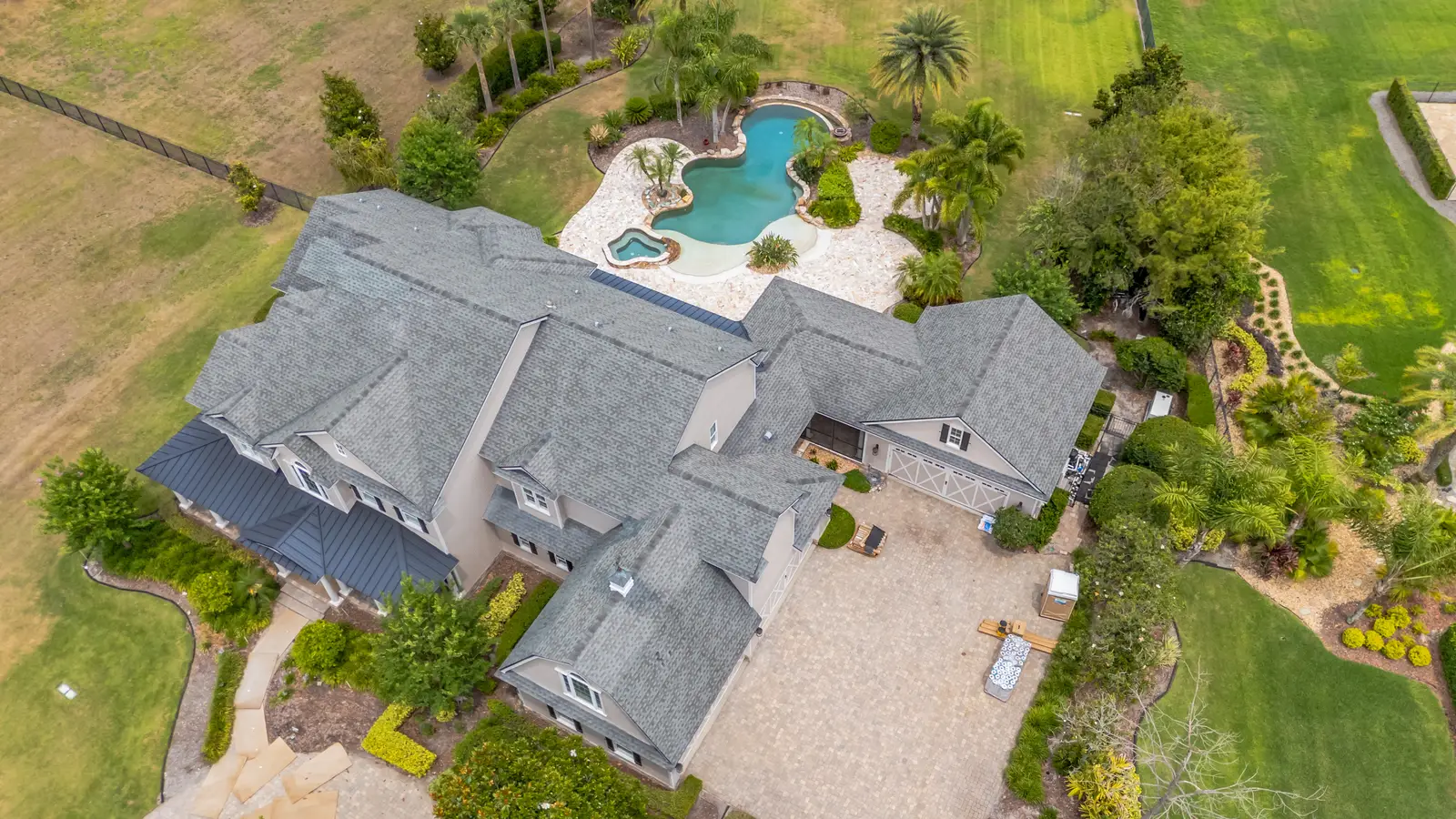
Why you cannot tell from the driveway
After a storm passes, the question is always the same: is this new, or is this just what years of Florida sun have already been doing to the roof. From the ground, at a distance, the two can look alike. Both show discoloration. Both show shingles that are not lying flat. The difference is in the pattern, not in any single shingle.
Wind and hail damage have a shape. They cluster on one slope, run along one edge, or scatter in a way that has nothing to do with age. Wear does the opposite. It spreads evenly across the whole roof, because the sun and the years hit every square foot the same way.
That distinction matters because it decides what happens next. New damage from a specific storm is a different conversation with your insurer than a roof that was simply due for replacement. Confusing the two, in either direction, costs you money or costs you a slower claim.
What wind and hail actually leave behind
Wind lifts before it tears. Look for tabs that are creased near the bottom edge and standing up slightly instead of lying flat, especially along roof edges and around any ridge or hip. A torn seal strip looks like a thin line where the adhesive holding two courses together has separated, sometimes exposing a strip of the shingle below that was not visible before.
Hail does something different. It bruises. A hail strike knocks granules off in a roughly circular mark, often with a soft or dark center where the mat underneath took the hit. These marks scatter across the roof with no particular pattern, sometimes concentrated on the slope that faced the storm. A dented vent cap or a bruised gutter nearby is often what sends people looking at the shingles in the first place.
Both of these are local and irregular. A handful of lifted tabs on one corner, a cluster of bruises on one slope, scattered rather than uniform. That irregularity is the tell. Wear does not pick a corner.
Wind lifts and tears. Hail bruises. Both leave a pattern with an edge to it, and wear never does.
What ordinary wear looks like instead
Age and UV do not pick a spot. A roof wearing out shows granule loss spread evenly across a slope rather than in a scattered burst, shingles curling at the edges in the same way on every course of a sun-facing side, and a uniform shift in color toward flat and faded rather than torn or lifted.
Tabs on a worn roof lie down. They may be brittle and cracked, but they stay flat against the roof instead of creasing and standing up the way a wind-lifted tab does. There is no bruised mat underneath and no clean knocked-off granule mark, just a slow, all-over thinning of the surface.
Compare one slope to another. If they look roughly the same age everywhere and nothing stands out against its neighbors, that is wear, not an event. If one section looks different from the rest of the roof, that difference is the thing worth having looked at.
Photograph it today, not in three weeks
The photographs that matter are the ones taken the same day, or as close to it as possible. Weather keeps moving after the first storm, and every day that passes gives wind, rain and the next system a chance to turn a clean, identifiable strike into something that just looks like generic wear. A lifted tab that gets worked by wind, rained through and baked a few more times does not look the way it did on day one.
From the ground, with a phone: the whole roof from each side of the house so the slope and context are clear, then the specific area zoomed in as far as it can be seen from below. Any debris in the yard, broken branches, shingle or tile pieces that came down, dented gutters or vent caps. Note the date and, if known, what the storm actually did — wind, hail, a specific line of weather.
Do this before calling anyone and before anyone gets on the roof. It costs nothing and takes a few minutes, and it is the only way to have a record of what the roof looked like right after the event rather than however many days later someone gets up there.
We photograph the roof itself as part of any visit, but those pictures start from whenever we arrive. Photos taken the same day are the ones that show the roof before the weather had any more time to work on it.
What is an emergency and what can wait
An emergency is water actively coming into the house, a hole or exposed decking open to the weather, or material hanging loose enough that it could come down on someone. Those are after-hours call situations. Stop the water where it is safe to do so, keep people away from anything that could fall, and call.
Granule loss, a few bruised spots, lifted tabs with no leak yet, a dented vent cap, or cosmetic damage with nothing coming through the ceiling do not need a call at midnight. All of it is worth having looked at, and worth doing before the next line of storms, but it can wait for daylight and a scheduled visit.
From the ground, it is safe to walk the yard and photograph what can be seen, check the attic with a flashlight for new staining or daylight that was not there before, and move anything inside that is catching water. It is not safe to climb a ladder for a closer look, and it is not safe to get on the roof itself under any circumstances, wet or dry, storm-damaged or not. Whatever cannot be seen from the ground is not worth a fall to go confirm.
We assess the roof itself, in person, and say plainly what it shows. We do not perform or sign wind mitigation or four-point inspections — a roofing license does not qualify under Florida Statute 627.711(2). Ours is a Florida Certified Roofing Contractor license, CCC1333347, and it covers the roof work and an honest account of its condition. We will not tell you what your insurer will decide about a claim. That is between you and your carrier. What we can give you is a straight answer about what is storm damage, what is wear, and what to do about each.