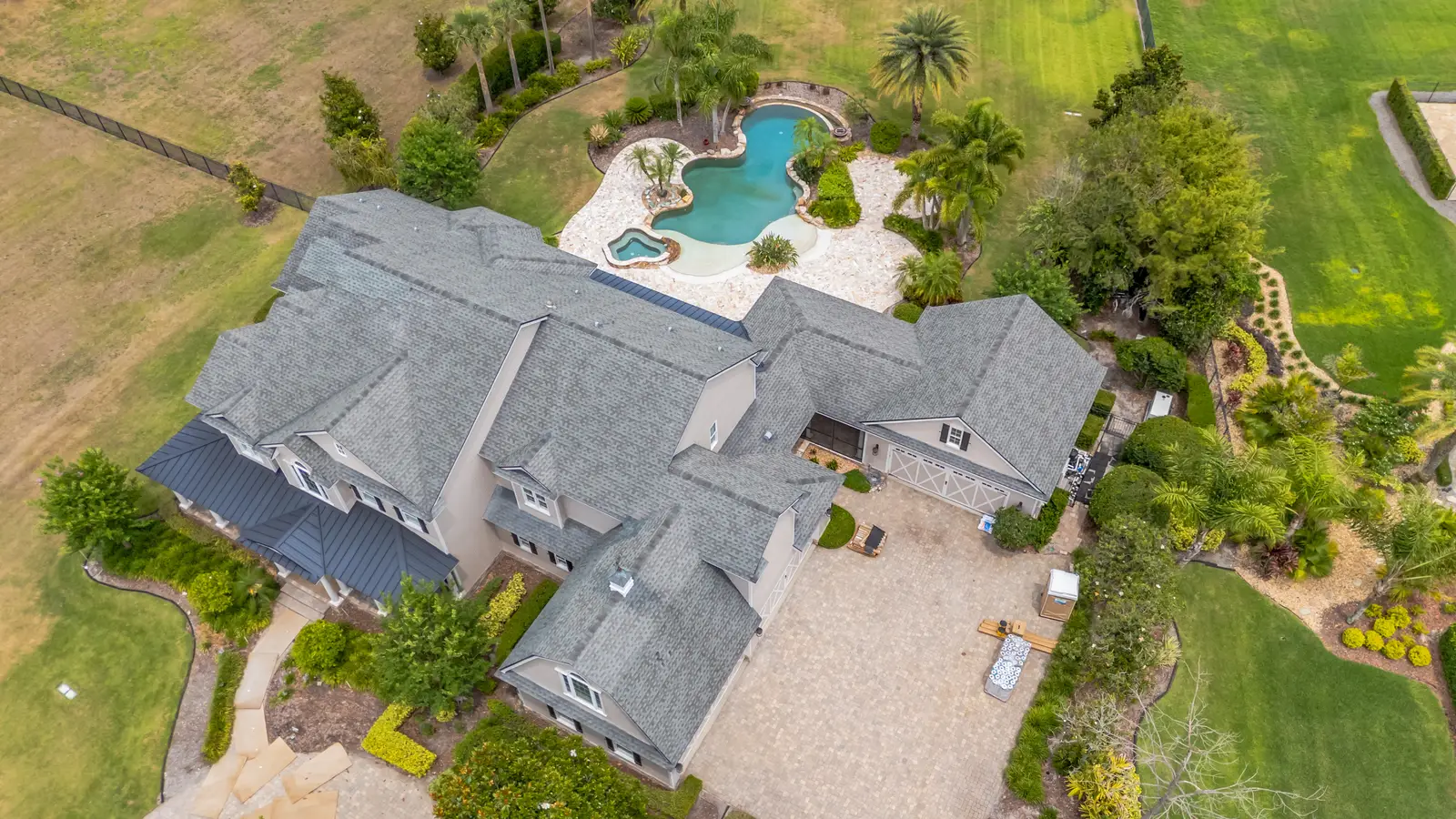
Before the dumpster arrives
A permit gets pulled before any material shows up, and it should be visible at the job site for the duration of the work. That permit is what ties the whole job to the county inspection schedule later on.
The dumpster and material delivery need room, so expect the driveway blocked for the length of the job and plan to move vehicles out of the way before the crew arrives. Material is usually staged on the roof or in the yard close to the house, not left sitting in the street.
Tear-off is loud and it shakes the house. Anything stored directly under the roof deck in the attic should come down first, because decades of dust and old fasteners work loose through the gaps and land on whatever is up there. Keep pets inside and away from the yard while debris is coming off, and warn anyone sensitive to noise that this is the loudest part of the job.
Tear-off: what comes off, and what turns up underneath
The old covering comes off down to bare decking, often in more than one layer if the house was re-roofed before without a full strip. A crew works a section at a time and dries that section in before moving to the next, rather than leaving the whole house open overnight.
Stripping the roof shows what has actually been happening to it: old patch repairs, rusted flashing that was never replaced, and water staining that did not show up from the ground. None of that is visible until the covering is gone.
Once the decking is bare, it gets walked and checked board by board. Soft spots, delaminated plywood and rotten sheathing get marked and cut out before anything else goes down. This is the point where a job's schedule most often moves, because how much decking needs replacing is not knowable until the old covering is off.
A roof is only as good as what it is nailed to. If a crew finds rot, replacing it is not an upsell, it is the part of the job that makes the rest of it mean anything.
Re-nailing to code, underlayment and the secondary water barrier
The decking gets re-nailed to the current Florida fastening pattern, which on an older house is often tighter than what was originally there. This is also one of the things a later wind mitigation inspection records, though we do not perform or sign wind mitigation inspections ourselves — that requires a separate qualification under Florida law, and the inspection itself is a different appointment with a different person.
Underlayment goes down next, synthetic or self-adhered depending on the covering and the slope. Valleys and eaves usually get an upgraded underlayment regardless of what covers the rest of the roof.
A secondary water barrier is either a fully sealed self-adhered membrane under the whole deck or taped seams on synthetic underlayment. Either way, it is the layer that keeps water out of the house if the covering above it is ever damaged, and it only makes sense to install while the roof is open.
Drip edge, valley metal, and flashing at walls and penetrations
Drip edge goes in along the eaves and rakes before the underlayment covers those edges, and it is what sends water off the roof instead of behind the gutters and fascia.
Valley metal matters more than most homeowners expect. Where two roof planes meet, water concentrates and moves fast, and that needs a properly lapped and bedded metal valley, not just underlayment folded into the corner.
Flashing at walls, chimneys, skylights and pipe boots is where a roof actually leaks, far more often than across the open field of shingles or tile. A proper replacement rebuilds and counter-flashes those details instead of caulking over whatever was there before.
Field installation, ridge venting, and closing the job out
The visible roofing goes on once the prep layers are down, following the manufacturer's exposure and fastening pattern for that product. Ridge vent is cut in at the peak where the roof is designed to breathe that way, and ridge cap goes over it.
Cleanup includes a magnet sweep of the driveway and yard for loose nails and screws, not just a visual check. Landscaping that was tarped during the job gets uncovered and the dumpster gets hauled away.
The job is not finished when it looks finished. The county runs its own inspection sequence on the permit, sometimes a dry-in check partway through and always a final inspection before the permit closes. Weather can push any of this back: nothing with exposed underlayment goes on during rain or high wind, so a crew that stops and waits is doing it correctly, not falling behind.